
Construction Phase
Independent construction monitoring.
Site inspection and quality assurance during construction. Protecting design intent through to handover. Defects caught at the cost of an inspection, not at the cost of a rebuild.
The scope gap nobody owns
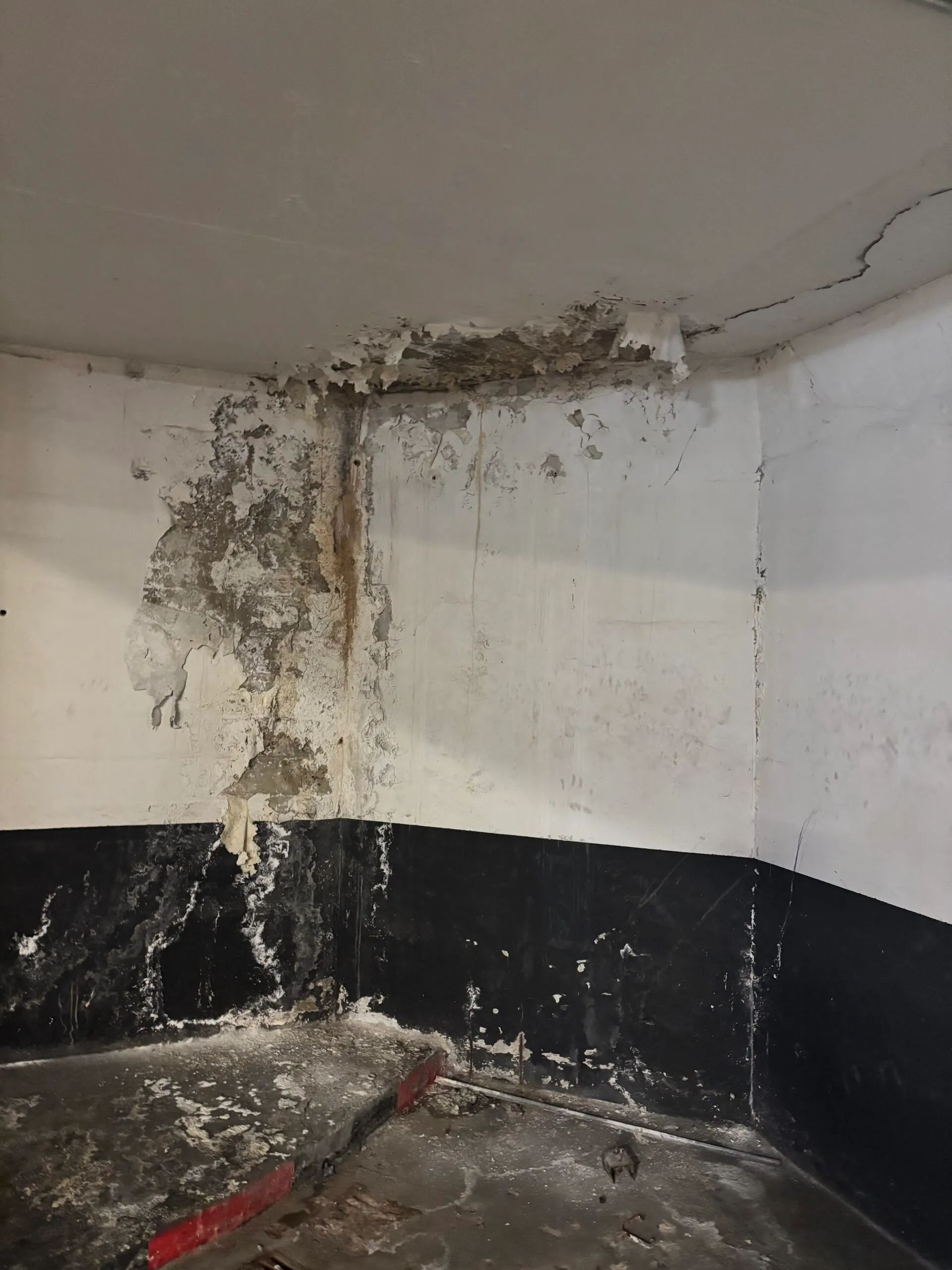
Most basement waterproofing failures aren't design failures. They're construction failures.
The design intent is usually sound. The leak comes later, during the build, when the design gets value-engineered, substituted, or detailed by people without waterproofing depth, and signed off with no specialist in the room. That gap is where we work.
On a design-and-build basement, waterproofing is usually handed down as a Contractor Designed Portion. The contractor takes the performance specification, develops the Stage 5 design, warrants it, and builds it. On paper, that's tidy. In practice, it's where the risk concentrates, because once the build starts, the people watching the works are the core design team, and waterproofing falls down the gap between them. No one on that team owns it to specialist depth.
So everyone assumes the waterproofing is covered. Often, no one is actually watching it.
What this service is
Independent oversight. Not construction management.
Construction monitoring for waterproofing, also known as a CMT (Construction Monitoring Team), is CLW's independent site inspection and quality assurance service, which takes place during the construction phase. It provides the client with an independent line of assurance that the waterproofing is being installed in accordance with the design intent and performance specification, by a specialist whose knowledge of waterproofing materials, application methods, and quality indicators is specific to the discipline.
Construction monitoring is not construction management. CLW does not direct the contractor's work, manage the programme, or assume construction-phase responsibility. The consultant observes, reports, and advises, providing the client with information to make informed decisions about the quality and progress of the waterproofing installation.
When is it needed
RIBA Stage 5. Through to handover.
Construction monitoring is needed during RIBA Stage 5 (Construction), from the start of waterproofing installation through to practical completion and handover. The monitoring scope is defined before construction begins, typically as part of CLW's appointment terms, and is coordinated with the contractor's programme to ensure CMT attendance during critical waterproofing operations.
Construction monitoring is needed on every commercial development where waterproofing works are being carried out. The scope and intensity of monitoring varies, from advisory monitoring (a defined number of targeted site visits) to formal CMT (comprehensive inspection with defined hold points), depending on the complexity of the waterproofing works, the experience of the appointed contractor and the consequences of waterproofing failure.
What we do client-side, through construction
We stay on your side. Not the contractor's.
We stay appointed on your side, from design through to completion. During the build, that means:
- We inspect at the stages that matter. Not a box-ticking visit. The critical points where waterproofing is made or lost.
- We verify what's installed against what was specified. The gap between the two is where leaks live.
- We own the bespoke conditions. The junctions, penetrations, and interfaces no standard detail covers, and that no whole building can be detailed identically.
- We scrutinise every value-engineering proposal before it's signed off. This is the single highest-value thing we do on site.
- We hold the specialist contractor to the contract they agreed to, with the authority to challenge work that departs from the design intent.
What CLW delivers
Six layers of construction-phase assurance.
Detailed design review
A review of the specialist contractor's detailed design drawings and method statements for compliance with the performance specification and design philosophy, before installation begins.
Pre-installation · Method statements · Drawings
Site inspections
Attendance during critical waterproofing operations to observe installation quality, verify workmanship against the specification, and identify any deficiencies that require corrective action. Inspections are documented with photographs and written reports.
Hold points · Photographic record · Written reports
Quality assurance review
A review of the contractor's quality assurance records (inspection reports, test results, material certificates, photographic evidence) for completeness and compliance with specification requirements.
Records review · Material certs · Test results
Deficiency reporting
When installation deficiencies are identified, CLW reports to the client and the contractor's site management, documenting the nature and location of the deficiency and the required corrective action. Follow-up verification confirms that corrective work has been completed satisfactorily.
Defect logs · Corrective action · Follow-up verification
CQA (Compliance Quality Assurance) review
A review of the contractor's overall quality management documentation for the waterproofing works.
CQA documentation · Compliance review
Handover review
A pre-practical completion review of the contractor's as-built documentation, warranty documents, and maintenance manual for completeness and accuracy, ensuring the building's O&M records include adequate waterproofing information.
As-built · O&M · Warranty docs
Why independence matters here
We have nothing to sell but the outcome.
We don't sell product. We don't work for the contractor or the supplier. So when we tell you a substitution is a bad idea, it's because it's a bad idea, not because it threatens a sale.
A supplier will give you an answer shaped by the product they're trying to sell. We have nothing to sell but the outcome. On a serious basement, that difference is the whole point.
What it looks like when it goes wrong
A value-engineering sign-off, with no specialist in the room.
A deep basement. High water table. The site backed onto a water treatment works, about as much external water pressure as ground gets.
The original design was sound: water-resisting concrete (Type B), backed by a barrier system (Type A). Appropriate for the conditions.
During construction, a value-engineering exercise was run and signed off by the contractor and the client, with no waterproofing specialist on board. The water-resisting concrete was swapped for ordinary reinforced concrete. The barrier details were changed.
The basement started leaking three days before practical completion.
None of it was a design failure. The design was right. It was a construction decision, made by people without the specialist depth to see what they were giving away, with no one independent there to stop it. A specialist in the room at that sign-off would have prevented the whole thing.
The commercial case
We're not the expensive line on the project. The leak is.
The fee for keeping us client-side through construction is a fraction of the cost of a single leak found at practical completion, before you count the programme delay, the finishes ripped out, the dispute, and the conversation with your client about why their new asset is wet.
On a major commercial basement, our involvement typically returns several times its cost in risk reduced and waste removed.
Questions PMs ask us
The questions, and our straight answers.
Most project managers meet this role for the first time on one of our jobs. These are the questions they ask, and our straight answers.
Question 01 It's a design-and-build contract. The contractor designs the waterproofing as a CDP and warrants it. Why do we need an independent consultant during construction?
Question 02 The contractor warrants the design. Isn't that our protection?
Question 03 We've issued Employer's Requirements and a performance spec. Isn't the spec enough?
Question 04 I've honestly never come across this role before. Is it normal?
Question 05 Can't our architect or engineer answer the contractor's waterproofing queries?
Question 06 Why not just ask the waterproofing supplier?
Question 07 Isn't this just adding cost to the project?
Question 08 We're already in construction. Is it too late to bring you in?
How it connects
The final stage of the design-to-delivery chain.
Construction monitoring is the final stage of CLW's involvement in the design-to-delivery chain. It verifies that the structural waterproofing design philosophy has been implemented on site, that the performance specification requirements have been met, that the contractor appointed through the waterproofing procurement strategy has delivered the expected quality, and that the collaborative working established during the PCSA phase has translated into a compliant installation. The findings from construction monitoring also feed back into CLW's design practice. Installation observations inform future design decisions and specification refinements.
Got a basement heading into construction, or a value-engineering decision on the table?
That's the point we're most useful. Talk to us before the sign-off, not after the leak.